Strategy
How to Get More Traffic to Your Website: 10 Ways That Work in 2026
To get more traffic to your website, make sure Google can index your pages, publish content that answers real searches, and add channels you can sustain, such as email, social media and local listings. Use paid ads for speed, and track every source in Google Analytics.
Website traffic is the number of visits your site receives, and every visit arrives from a source: search, social, email, links on other sites, ads or a direct visit. This guide shows ten ways to grow each source, how to choose where to start, and how to check that the traffic is worth having. It also flags traffic advice that is out of date. Sources are checked as of 31 October 2026.

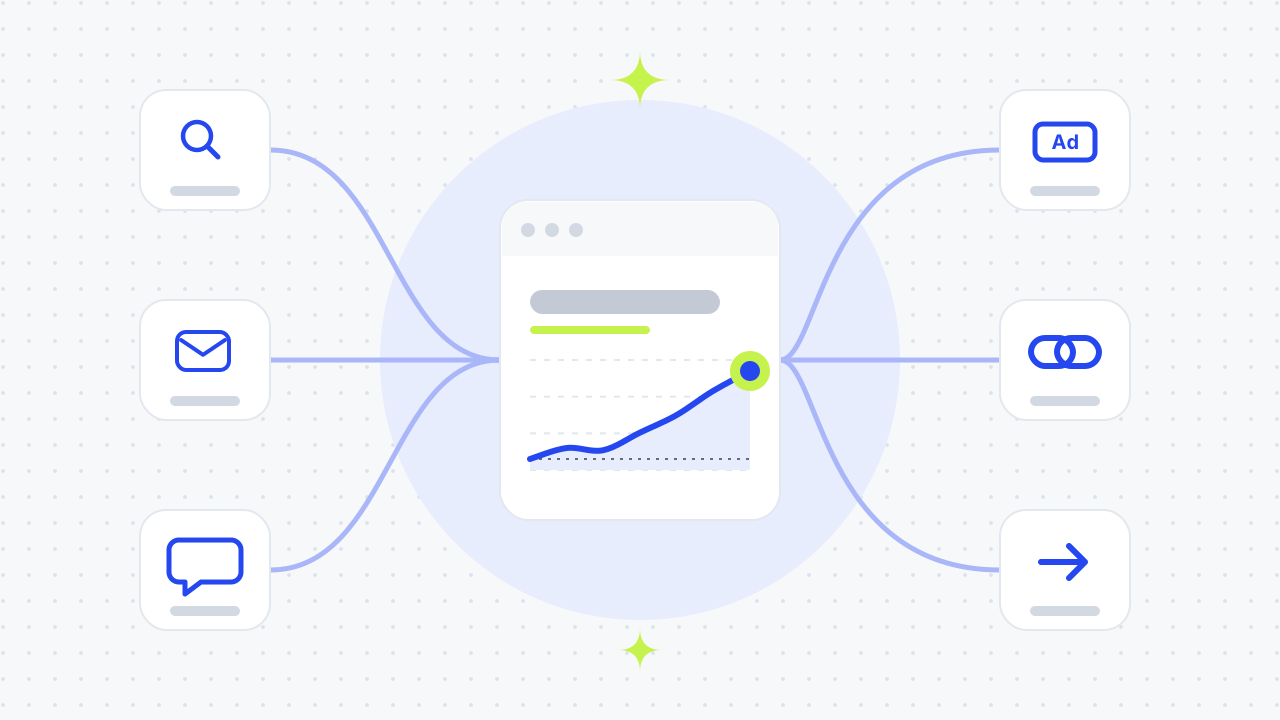
What are the main sources of website traffic?
Google Analytics 4 groups visits into channels, and knowing them tells you where traffic can come from. The table below summarises Google's default channel group definitions, which show no date and a 2026 copyright.
| Channel | What counts as a visit from this channel |
|---|---|
| Organic Search | Unpaid search results, including Google's AI Overviews and AI Mode |
| Direct | A saved link, or someone entering your URL directly |
| Referral | Unpaid links on other sites or apps, such as blogs and news sites |
| Organic Social | Unpaid links on social sites such as Facebook |
| Links in emails | |
| Organic Video | Unpaid links on video sites such as YouTube, TikTok or Vimeo |
| Paid Search | Ads on search engines such as Google or Bing |
| Paid Social | Ads on social sites |
| Display and Affiliates | Display ads, and links on affiliate sites |
| AI Assistant | Visits from assistants such as ChatGPT, Gemini or Copilot, excluding Google's AI Overviews and AI Mode |
Unpaid channels take longer but do not stop when a budget does. Shopify puts it plainly: paid channels bring visits quickly but stop when spending stops, while organic channels take longer and need no ongoing ad spend.
How do you get more traffic to your website?
Work through these ten ways in order, starting with the ones that cost time rather than money.
- Make sure Google can find your site. Fix indexing before anything else.
- Write content that answers real searches. Match what people want.
- Improve how you appear in search results. Tune titles, descriptions and snippets.
- Set up local search. Claim your Google Business Profile.
- Earn links and press coverage. Give others a reason to mention you.
- Build an email list. Reach people who already know you.
- Use social media and online communities. Go where your buyers talk.
- Make video and podcasts work for your site. Send listeners and viewers back to your pages.
- Use paid ads for fast tests. Pay for visits you can measure.
- Connect offline customers to your site. Turn shop visits into website visits.
1. Make sure Google can find your site
Pages that are not indexed cannot bring search traffic, so check this first. Search Google for "site:yourdomain.com", open the Page indexing report in Google Search Console, and submit your sitemap. Gravitec and the other guides all point to technical basics such as broken links, redirects and page speed.
Our guide to fixing technical SEO issues without a developer walks through the Search Console routine step by step.
2. Write content that answers real searches
Content that matches what people search for is the most durable source of free traffic. Shopify advises starting with customer personas, pain points and keyword research for terms with decent demand and lower competition, then using a content gap analysis to find missing topics. AU Digital calls blogging one of the most effective ways to increase organic traffic.
Check search intent before you write. Our guides on how to do keyword research and connecting search intent to revenue explain the method, and how to rank on Google covers the full process.
3. Improve how you appear in search results
Small changes to titles and descriptions can raise clicks without any new ranking. Shopify says Google Search Console reveals pages with high impressions but low click-through rates, which it calls quick optimisation wins. It suggests keeping title tags near 55 characters and meta descriptions near 145, though Google sets no fixed limit, so treat those as guides.
Rich results can also help. Shopify says they add ratings, pricing and availability to a listing and need structured data. Internal links also help. Shopify advises linking authority pages to the pages you want to rank, using descriptive anchor text. Gravitec notes that internal links help Google find new content and keep visitors on your site longer. Our on-page SEO checklist covers titles, headings and links.
4. Set up local search
If customers find you by place, a Google Business Profile is the fastest free win. Shopify cites BrightLocal in saying only 35% of small businesses have one, and advises keeping your name, address and phone number consistent everywhere and using local keywords in titles. It adds that AI Overviews appear far less often on local-intent searches.
Our local SEO checklist and Google Business Profile guide cover the steps, and our local SEO service does the work for you.
5. Earn links and press coverage
Links from relevant sites send referral traffic and help rankings. Shopify suggests guest posts on blogs with overlapping audiences, expert roundups and pitches for "best of" lists. It also advises answering reporter requests on platforms such as Qwoted and Featured, and keeping a media page with brand background and a press contact.
Avoid buying links: Google's spam policies treat it as link spam. Our guides to digital PR for SEO and link building for beginners explain safe methods.
6. Build an email list
Email reaches people who already know you, and you own the list. Shopify says an owned email list reduces reliance on external advertising, and cites Klaviyo's 2026 data of an average email click rate of 1.69%. At that rate, 10,000 subscribers would send roughly 169 visitors per campaign.
In the UK, marketing email to individuals needs specific consent unless the soft opt-in applies. Every message also needs a clear way to opt out, according to the Information Commissioner's Office. Use a tick-box sign-up that names what you will send. Web push notifications are a related option: Wingify describes them as opt-in browser messages for time-bound content, though they suit some sites better than others.
7. Use social media and online communities
Pick the platform where your buyers already spend time. Shopify's survey data say 35% of store owners named social presence as a first-year growth strategy, behind word of mouth at 53%. It advises posting consistently, replying to people discussing your brand and sharing launches with friends and family. Influencer partnerships can also send visits, but paid posts must be labelled as ads under UK rules; our digital PR guide explains the labelling.
For forums, Shopify and Gravitec both say to follow each community's rules, because promotional posts can be downvoted or get you banned. Answer questions helpfully and link to your page only when it fits. Gravitec suggests Quora, Facebook Groups and Reddit.
8. Make video and podcasts work for your site
Video and audio only bring traffic if they send people back to a page. Shopify notes that podcasts and webinars do not turn listeners into visitors automatically. It cites Shopify Masters' method of publishing a transcript and summary as a blog post, linking to it in the show notes and listing the resources mentioned.
For video, Shopify describes YouTube as the second-largest search engine and suggests repurposing long videos as short clips. Put your URL in every description and mention a specific page, not just your homepage.
9. Use paid ads for fast tests
Paid ads buy speed, but the traffic ends when the budget does. Shopify calls search ads a way to reach people already looking for what you offer, and says paid traffic does not compound. AU Digital describes ads as a supplement to organic work, with campaigns capped by a budget you set.
Start small. Test one search campaign or one social campaign, tag the links with UTM parameters and judge the result by leads or sales, not clicks. Shopify warns that using too many channels at once makes results hard to attribute.
10. Connect offline customers to your site
Your existing customers are a cheap source of visits. Shopify suggests putting URLs or QR codes on signage, receipts and packaging, collecting emails at checkout and giving people a reason to go online, such as a discount code. It also lists local events and pop-ups.
Tell customers what you will send when you collect emails, as the UK consent rule above requires.
Which traffic source should you start with?
Start with the source that matches your goal, time and budget, and add the next only once the first works. The table is our synthesis of Shopify's guidance on choosing a strategy and the sources above.
| If you need... | Start with | Why | Watch out for |
|---|---|---|---|
| Visits this week | Paid search or paid social | Ads start sending traffic as soon as they go live | Visits stop when the budget stops |
| Steady free traffic over months | Search content and technical basics | Shopify says SEO results usually take three to six months | Needs patience and regular updates |
| Local customers | Google Business Profile and local pages | Free, and local searches lead to nearby buyers | Needs consistent business details |
| Repeat visits from existing customers | Email list | You own the audience | Needs consent in the UK |
| Brand awareness with a creative product | Social media and video | Discovery happens on social platforms | Algorithms change, so do not rely on one platform |
| Authority in a competitive niche | Links and press coverage | Referral traffic plus ranking support | Slow, and needs a real story |
Shopify's advice is to start with one or two strategies and add more once they perform consistently. It also says to review traffic every few months and judge it against your goals, not in isolation.
How do you track whether your traffic is working?
Track visits by channel, then by what those visitors do. Connect Google Analytics 4 and Google Search Console. Shopify says GA4 shows pages visited, time on site and behaviour by referral source. The Search Console Performance report lists queries, impressions and click-through rates.
Tag links in emails, ads and social posts with UTM parameters so Analytics can attribute visits to a campaign. Check conversion before you shift budget. Shopify notes that high visits with low average order value suggest an upselling or brand-awareness role for a channel. Fewer visits from a channel with high-value customers suggest nurturing it. Wingify says quality of traffic matters more than quantity, and that volume helps only once relevance is established.
Shopify also says fewer than half of store owners actively track traffic, so simply doing this puts you ahead.
Which traffic advice is out of date?
Some popular traffic advice is older than it looks. Wingify's page shows an updated date of 22 August 2026, but it still cites video-use figures for 2017 to 2019 and a Google Analytics path of "Behavior" then "Site Content". Gravitec points to an "Acquisitions" report path, and describes LSI keywords as the way to help Google understand a topic. The table lists what to check before you act on claims like these.
| Claim | Where it appears | What to do |
|---|---|---|
| A "last updated" date means the figures are current | Wingify (updated 2026, figures from 2017 to 2019) | Check the year of each statistic before you use it |
| Google Analytics reports sit under "Acquisitions" or "Behavior" | Gravitec, Wingify | Use the channel groups in GA4 as Google now documents them |
| Add LSI keywords to rank | Gravitec | Treat as unproven; the Google pages reviewed here do not mention LSI keywords |
| A one-second delay cuts page views by 11% | AU Digital (asterisked, no source shown) | Treat as unverified; speed still matters for visitors |
| Bounce rate lowers your rankings | Gravitec | Treat as unproven; the Google pages reviewed do not say so |
The same rule applies to this guide: statistics from Shopify, Klaviyo and BrightLocal are third-party figures reported by Shopify, so check the original before quoting them.
How long does it take to get more traffic?
Paid traffic starts at once, while search traffic usually takes months. Shopify quotes its SEO specialist Arthur Camberlein saying most sites see measurable SEO results in three to six months, and notes that paid ads can drive traffic almost instantly. Google's SEO Starter Guide says changes can take from hours to months to show an effect.
Plan for both. Use paid tests or email to learn quickly while search content builds. Our guide to how long SEO takes gives timelines by site type.
01Is SEO an organic way of attracting traffic?+
Yes. SEO aims to earn unpaid visits from search results, which Google Analytics groups as Organic Search. Unlike paid search, the visits do not stop when a budget ends, though rankings still need upkeep. Our guide to what SEO is explains the basics.
02Is SEO paid or free?+
You do not pay Google for organic rankings, but SEO costs time, tools or help. Search Console and PageSpeed Insights are free, and many tasks need only effort. Paid costs arise when you hire an agency, buy research tools or pay for links, which Google's spam policies warn against.
03How quickly does SEO work?+
Usually in months. Shopify's SEO specialist says most sites see measurable results in three to six months, and Google says changes can take hours to months. You can confirm technical fixes in Search Console sooner than you will see ranking gains.
04How do I start SEO as a beginner?+
Start with the first three ways above: check indexing, target a few specific searches and write helpful pages. Add a Google Business Profile if you serve a local area. Our SEO for small business guide shows what to do first.
05Why am I getting traffic but no sales?+
The traffic may be the wrong kind, or the page may not help people act. Shopify advises checking conversion before shifting budget, because a channel can send many visits that are low value. Check that the page gives visitors a clear next step. Wingify adds that relevant visitors matter more than total visitors.
06How do you get your Shopify store noticed?+
Combine free search and content with a few focused channels. Shopify's guide lists collection pages, local SEO, a blog, email, social content and affiliates among its ideas. It says to start with one or two and add more once they work. Our Shopify SEO checklist covers the store settings.
07How do you drive traffic to a website for free?+
Use free tactics: helpful content for search, a Google Business Profile, an email list, social posts that solve problems and useful answers in online communities. Shopify's FAQ lists organic social posts, an email list, online communities, SEO and guest blogging. Free tactics cost time instead of money.
08What is the fastest way to get traffic to a website?+
Paid ads. Shopify says pay-per-click ads on search engines and social platforms can drive significant traffic as soon as they go live. The traffic stops when the budget does, so use ads to test and learn while slower channels grow.
09How can I get traffic without social media?+
Use search, email, referrals and local listings. Search content, a Google Business Profile, an email list, guest posts and press coverage all work without a social account. Shopify and Gravitec both note that social traffic depends on platform algorithms, which change.
10Why is my direct traffic so high?+
Direct traffic is a catch-all. Google defines it as visits from a saved link or someone entering your URL. Gravitec adds that it includes traffic Analytics could not identify, such as links from PDFs, QR codes or untagged campaigns. Tag your campaign links with UTM parameters to move those visits into the right channel.
11Does traffic from AI chatbots show up in analytics?+
Yes. Google Analytics 4 has a separate AI Assistant channel for visits from assistants such as ChatGPT, Gemini or Copilot. Visits from Google's AI Overviews and AI Mode count as Organic Search. Shopify reports AI-referred traffic grew sharply but remains a small share of visits.
12Should I focus on traffic quality or quantity?+
Quality. Wingify says relevant visitors matter more than total visitors, and that volume helps only once quality is established. Judge each channel by leads or sales, not visits alone, and put your time into the sources that produce them.
Free SEO audit
Get a straight answer on what to fix first.
Request a free SEO audit and we will come back with the largest constraint on your organic growth and the first practical fix. No sales sequence.
Prefer to hire through Upwork? Hire me on Upwork