Strategy
How long does SEO take? Honest timelines by site type
SEO can show a technical change in days, search impressions in weeks, and leads over months. There is no fixed deadline for a ranking or sale. Timing depends on whether Google can index the page, how well it matches the query, market competition and whether visitors become customers. Measure those stages separately.
“How long?” is often really “when will the investment start paying for itself?” Those are different clocks. A fixed page may be indexed quickly, yet a new business can take much longer to earn trust and qualified demand. This guide gives planning ranges, the evidence to watch at each stage and signs that waiting has turned into a problem.

Why does SEO have several timelines?
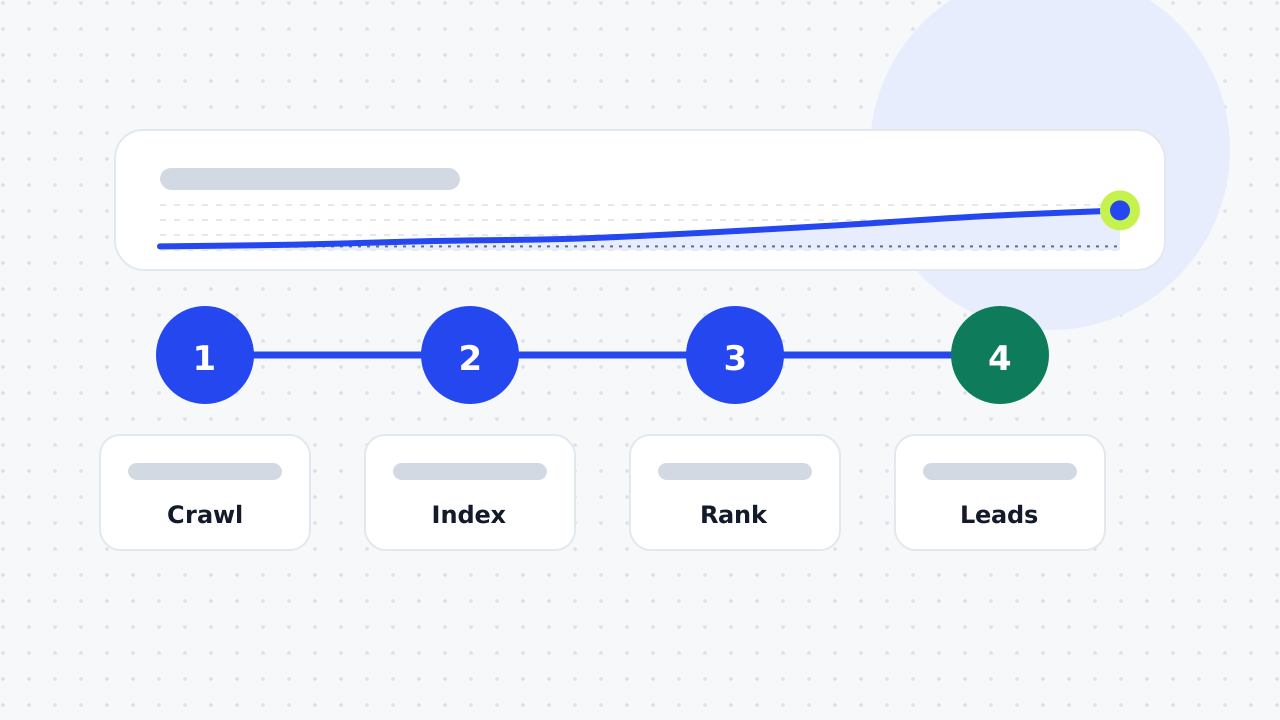
SEO work passes through discovery, crawling, indexing, ranking, clicking and conversion. A delay at one stage carries into the next. Google says a requested recrawl can take a few days to a few weeks, and a request does not guarantee inclusion in results. Its SEO Starter Guide says some changes take effect within hours while others may take several months.
This is why “we published it yesterday” is not evidence that a campaign has failed. It is also why “SEO always takes six months” is too simple. Fixing an accidental block on an established service page is a different job from making a brand-new domain competitive for a national term. Keep a date for each change and observe the appropriate stage before judging it.
What can happen in the first three months?
The first month should establish access, a baseline and a ranked list of work. Check Search Console, analytics, the most valuable pages and the enquiry path. Repair obvious crawl or conversion failures first. These actions can change what the site is eligible to show for, but they cannot force Google to rank a page.
In months two and three, improve service pages, internal links and content that matches real queries. Watch whether the right URLs become indexed and whether non-branded impressions appear for relevant searches. A rise in impressions without clicks can be an early signal; it can also mean the page appears too low or attracts the wrong query. Read the actual query and landing page before celebrating the number.
| Stage | Useful evidence | What it does not prove |
|---|---|---|
| Technical change shipped | Page loads, links work, correct index rules | Google has recrawled it |
| URL crawled or indexed | Search Console URL Inspection | It ranks for the target query |
| Relevant impressions rise | Search Console query and page data | People clicked or enquired |
| Qualified clicks rise | Search Console and analytics | Those visits became customers |
| Enquiries and sales rise | Forms, calls, CRM records | SEO alone caused every sale |
The table gives a reporting sequence, not a deadline. Google's Search Console guidance explains which reports show indexing and performance. Use the same view each month so a change in filters does not look like a change in results.
When should leads and revenue appear?
Qualified leads often lag visibility because a page must first reach the right searcher, earn a click and persuade that person to act. Revenue may lag further if customers compare several suppliers or take weeks to approve a purchase. Plan the forecast from your own sales cycle, not a generic “page one in 90 days” promise.
Published agency guides commonly use three to six months as a planning range for noticeable traffic or lead movement, with longer periods for harder markets; for example, SEO.com describes that range. That is an industry estimate, not Google's guarantee or a benchmark for every site. Treat it as a budget conversation starter and insist on earlier checks of delivered work and leading indicators.
A new site with little history
A new site may need several months to build the pages, internal structure and outside references required to compete. A narrowly targeted service query can move sooner than a broad national keyword, but indexing itself is not a sign that the business will win customers. Set the first quarter around a technically sound site, clear offers and a few high-intent pages; budget a longer period to judge steady non-branded demand.
An established local business
An established local business can sometimes gain useful visibility sooner by correcting its Business Profile, fixing contact details and improving a service page that already receives impressions. Distance still affects map results, and results can differ by neighbourhood. Track calls, bookings and area-specific queries, not a single map ranking checked at the office. Our local SEO for small business guide puts those steps into a month-one plan.
An established site with a technical problem
An established site can recover more quickly when a single, verifiable fault blocks valuable pages. Examples include an accidental noindex, a broken redirect or a failed form. The fix may be fast to ship, but recrawling, reindexing and ranking can still take time. Record the before state, repair it, use URL Inspection and verify the after state rather than assuming a deployment solved the search problem.
A competitive national or ecommerce site
Competitive terms and large sites often require a longer programme because many templates, content gaps and authority signals must improve together. A product page can be indexed yet struggle against established retailers. Prioritise categories or queries with realistic commercial value, then measure progress by page group. A six-month report may show the direction; a full profit assessment can require a longer sales and seasonal cycle.
What makes SEO faster or slower?
The starting position matters: a site with relevant pages and some authority needs less foundational work than one with neither. Search intent matters too. If a guide targets a query where searchers want a service, rewriting it will not necessarily solve the mismatch; the business may need a service page. Competition, available staff time, approval speed, development capacity and the frequency of useful publishing also affect progress.
Technical access is the first multiplier. Google cannot rank an important page it has not indexed. Internal links help readers and crawlers reach it. Accurate titles and helpful content make the page a better candidate for relevant searches. Links and mentions from appropriate outside sources can strengthen the site, but buying low-quality links is a risk rather than a shortcut. Use our SEO audit checklist to identify the actual constraint before choosing a tactic.
Can you speed up SEO safely?
You can shorten avoidable delays by fixing access problems, choosing achievable high-intent queries and publishing complete pages that answer them. Submit an accurate sitemap, link to important pages from relevant existing pages and request a recrawl after material changes when appropriate. Google cautions that requesting indexing does not guarantee immediate inclusion, so repeating the request is not a growth strategy.
The fastest commercial fix may be outside rankings: make the contact action work, clarify price or service area, or improve a page already receiving qualified clicks. If immediate demand is essential, use paid search while SEO work matures. Our SEO vs PPC comparison explains how to split the budget without treating one channel as a universal winner.
When does a slow campaign need a change of plan?
Investigate when important pages remain unindexed after the cause should have been fixed, when the site gains impressions only for irrelevant queries, or when clicks rise but qualified enquiries do not. Each pattern points to a different problem: access, intent or conversion. Waiting longer without naming the bottleneck is not a strategy.
At each monthly review, ask: what changed, which URL or query should respond, and what would count as evidence? If a planned page was never published, time alone cannot produce its result. If a page is indexed but losing to better answers, compare usefulness and proof. If the page wins visits but no sales, inspect the offer and journey. This keeps a slow campaign accountable without pretending search results are under direct control.
What should your SEO reporting timeline include?
Agree a baseline before work starts and report progress at the same intervals. Track completed tasks, indexed money pages, non-branded query groups, qualified organic clicks and enquiries. Record major external factors such as site launches, seasonal demand and paid campaigns. Attribute revenue carefully, especially when buyers return through another channel before contacting you.
A useful first-quarter plan is: month one, fix access and measurement; month two, improve the most valuable pages; month three, review query and lead evidence and revise the queue. That sequence is an example, not a service guarantee. Before signing a contract, ask the supplier what they expect to see by each review and what they will do if it is absent. Google's hiring guidance recommends asking about expected results and timeframe.
For a business case, estimate the extra customers needed to repay the full cost and compare that with a conservative lead forecast. Our is SEO worth it? guide includes a worked calculation. If you need a diagnosis of the current site's starting point, request a free SEO audit and ask for the likely bottleneck, not a promised ranking date.
01How long does it take for a new website to appear on Google?+
Discovery and crawling can take days to weeks, and indexing is not guaranteed. Check URL Inspection and make sure the page is accessible and useful before requesting a recrawl.
02Can SEO work in one month?+
Some fixes can be deployed and noticed within a month, especially on an established site. One month is usually too short to judge the full commercial return of a new programme.
03Why does my page rank but get no clicks?+
It may appear low in results, match the wrong query or have a snippet that does not answer the searcher's need. Check the query, position trend and actual result before rewriting the page.
04How long does local SEO take?+
Profile corrections may become visible sooner than sustained growth in calls. Map results depend partly on the searcher's distance, so judge qualified local enquiries across your area over time.
05How long does technical SEO take to show results?+
The fix can be quick, but Google must crawl and process the changed page before search results may change. Use Search Console to confirm each stage rather than assuming deployment equals recovery.
06Does publishing more blogs make SEO faster?+
Not automatically. A useful service page or a fix to an existing high-intent page may produce more value than many broad blog posts. Publish when a page answers a distinct customer need.
07Can an agency guarantee page one in 90 days?+
No agency controls Google's organic rankings. Ask for the work plan, the evidence they will measure and the assumptions behind any forecast.
08How long before SEO pays for itself?+
Payback depends on cost, customer margin and the number of additional customers the work produces. Calculate a break-even target and review actual qualified leads against it.
09Should I stop SEO after six months with no sales?+
Diagnose the stage that failed before deciding. No relevant visibility, no clicks and no conversions call for different fixes; a campaign with completed work but no viable demand may need to stop.
10Does a Google core update reset the timeline?+
No fixed clock starts at an update, but its effects can change visibility and require reassessment. Google says improvements may take days or months to show, and results are not guaranteed.
11How often does SEO need to be updated?+
Review performance and important pages regularly, especially after a site change, a new offer or a noticeable traffic shift. Update content when facts, customer needs or the search results change; a calendar date alone is not a reason to rewrite a useful page.
12How much time do I need for SEO?+
The required time depends on the size of the site, the competition and whether someone else handles technical changes. Reserve enough time to implement and verify a small priority queue; a report without action will not shorten the results timeline.
Free SEO audit
Get a straight answer on what to fix first.
Request a free SEO audit and we will come back with the largest constraint on your organic growth and the first practical fix. No sales sequence.
Prefer to hire through Upwork? Hire me on Upwork